

After my profile was published in Entrepreneur Daily, my alma mater, Nanyang Institute of Technology, invited me for a follow‑up interview. Below is the English version of that feature.
Original: Nanyang Media
From Nanyang to the Global Tech Frontier
A profile of Cheng Lu, distinguished alumnus of the School of Software at Nanyang Institute of Technology and expert in developer ecosystems and open‑source localization
In Henan, generation after generation of young people start out at local universities and then step into a broader world of technology. Cheng Lu, a distinguished alumnus of the School of Software at Nanyang Institute of Technology, is one of the most representative among them.
Cheng is a technologist who has spent fifteen years deeply involved in developer ecosystems and open‑source technology localization. A graduate of the School of Software at Nanyang Institute of Technology, he went on to lead multiple Google developer initiatives in China, helping to drive the adoption of Flutter in the Chinese market. He serves as a review committee member for Senior Member elevation at the Institute of Electrical and Electronics Engineers (IEEE) and is a Hugging Face Fellow in the world’s largest open‑source AI community.
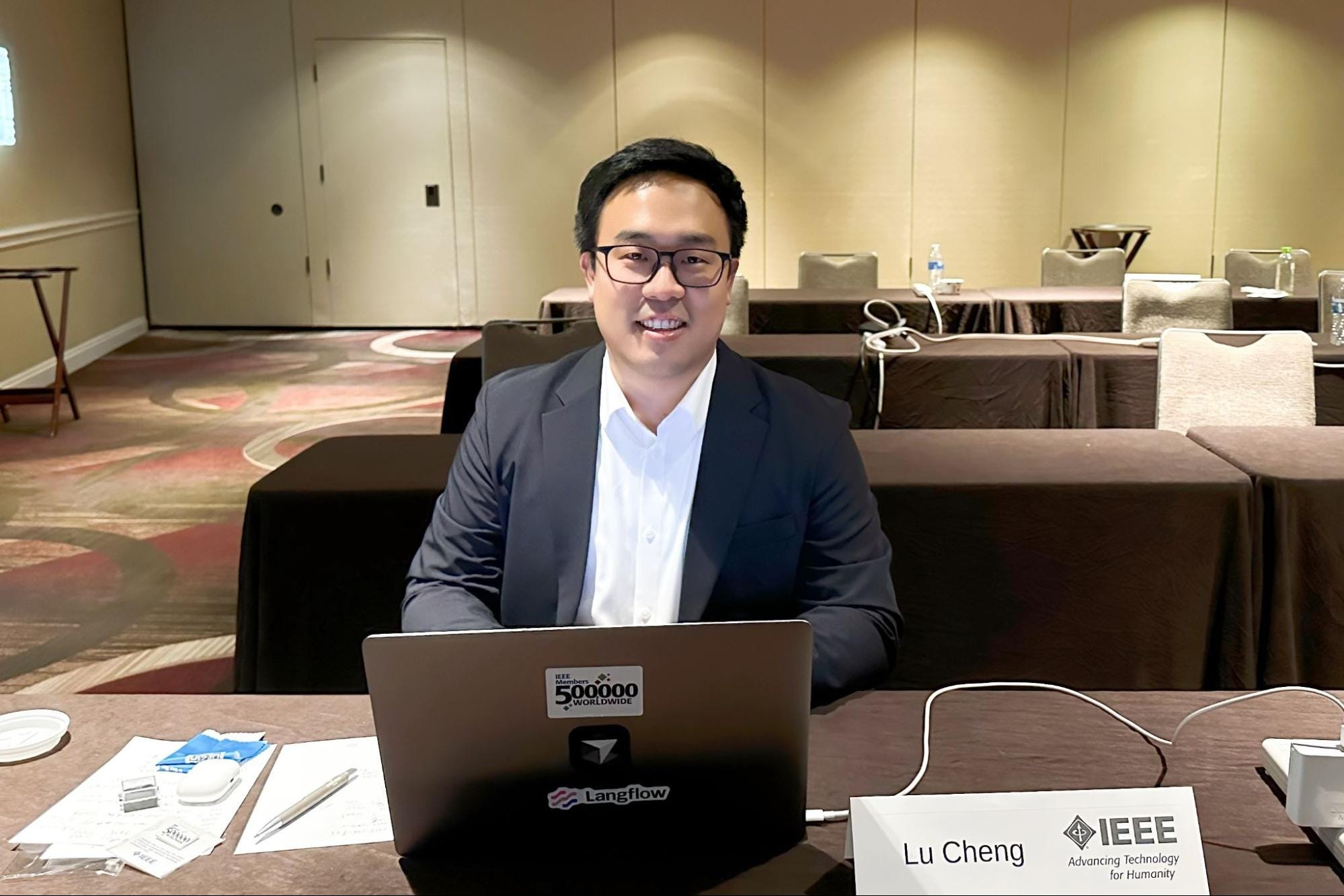
Not long ago, we conducted an in‑depth interview with Cheng via video link. Just before the call, he had finished a full day of IEEE Senior Member review meetings. As an invited member of the review committee, he works with experts around the world to evaluate applications from a wide range of technical and engineering fields, assessing whether candidates have achieved the level required for Senior Member status in terms of research output, engineering practice, and industry impact. His participation in this evaluation work is itself a recognition of his professional standing in engineering and technical community building.
“I was born and raised in Henan, and I am an engineer trained by Nanyang Institute of Technology,” Cheng says with particular warmth when speaking of his hometown and alma mater. “Many of the things people see later on were first sparked in the School of Software at Nanyang Institute of Technology.”
1. An engineering journey ignited at Nanyang Institute of Technology
Recalling his years studying at the School of Software, Cheng uses a few key words: openness, inclusiveness, and a willingness to give young people opportunities.
He specifically mentions Dean Liu of the School of Software and several heads of teaching and research groups. “What the School gave us back then was a cutting‑edge, open, and inclusive environment for learning and practice,” he recalls. “Our professors encouraged us to experiment with the latest technologies and created many project opportunities right on campus. They pushed us to experiment boldly and were there with full support at critical moments.”
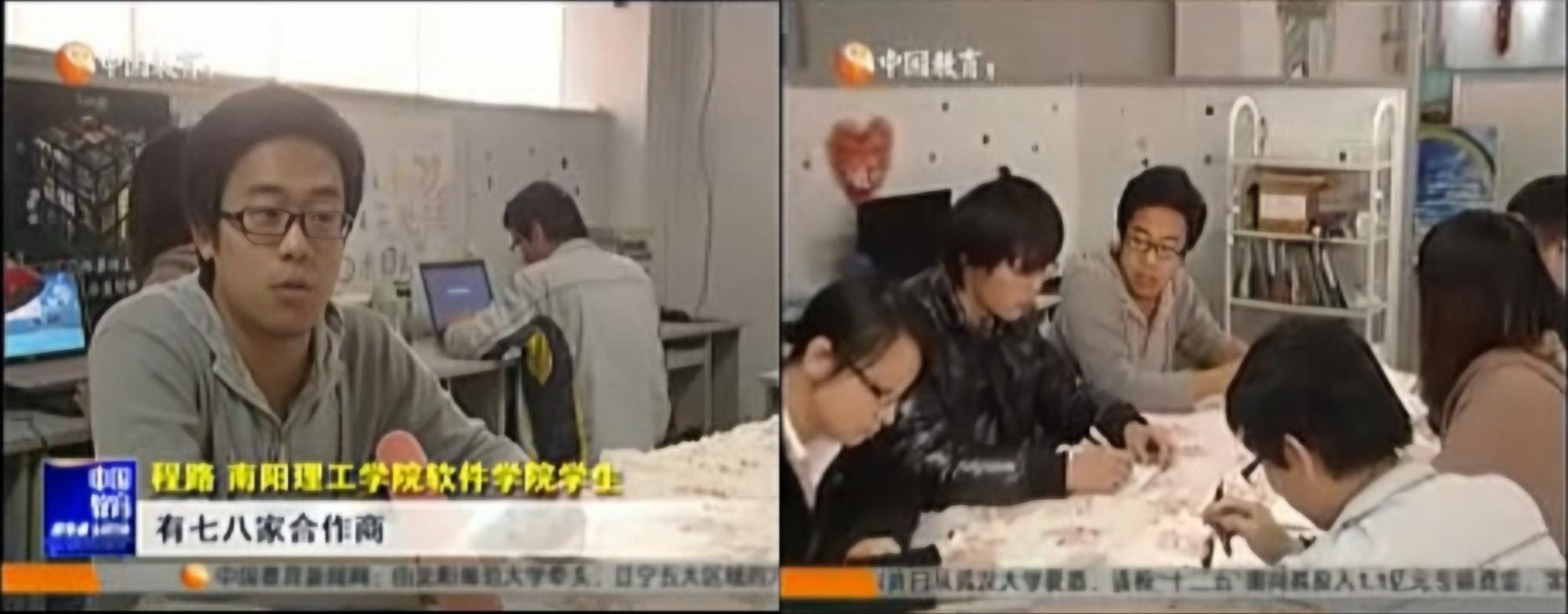
In Cheng’s eyes, the relationship between faculty and students at the School of Software felt more like that of friends than of traditional teachers and pupils. Cutting‑edge technology trends could be debated in class, while after class they would discuss product ideas and career plans together. When students had questions, they could knock on a professor’s door at any time; when a promising new direction emerged, the typical response from a teacher was, “Go ahead and try it first—tell us what support you need.”
“What we learned in technology classes was never confined to textbooks; it stayed in step with the frontiers of the industry,” Cheng recalls. “In 2010, often called the first year of mobile internet in China, our professors were already introducing us to systematic knowledge about mobile internet. Many of our assignments ended up becoming small but fully functioning products.”
It was in this environment that he developed his core identity as an engineer: building a solid foundation while applying technology to real‑world scenarios whenever possible.
2. Founding a Google Developer Group in Nanyang while still a student
Around 2010, when mobile internet was just beginning to take off across China, Cheng was still an undergraduate. Together with several like‑minded classmates and supportive professors, he did something that seemed quite ahead of its time on campus—he founded a Google Developer Group (GDG) and began inviting engineers from major companies across the country to Nanyang to share their technical experience.

“We did a lot of research at the time because we wanted to bring mature global models of technology learning communities onto our campus,” Cheng recalls. By then, the School of Software at Nanyang Institute of Technology had already incorporated a great deal of cutting‑edge content into its curriculum, and the School strongly supported student‑led technical events. That gave him a great deal of confidence.
With guidance from Google and organizers of other Google Developer Groups across China, and with the backing of the School, the Nanyang Google Developer Group quickly held its preparatory and inaugural meetings and was formally established. The community served students at Nanyang Institute of Technology and other local universities, and was open to local technology enthusiasts. It regularly hosted technical salons and hands‑on workshops on topics such as Android development, web technologies, and cloud services.
Cheng and his peers reached out to speakers through all kinds of channels, inviting engineers from major companies in Beijing, Shanghai, Shenzhen, and other cities to give talks in classrooms at Nanyang Institute of Technology and share their first‑hand experience. For some of these engineers, it was their first time visiting Nanyang, and they were pleasantly surprised by the students’ enthusiasm for new technologies.
To make each event a success, the team took on everything themselves—from poster design and venue setup to equipment testing and content planning. “During those years, the School of Software at Nanyang Institute of Technology was buzzing with technical events,” Cheng says. “Many students first truly felt in those activities that what they were learning in class connected directly to the wider world of technology.”
These experiences of organizing communities and experimenting with entrepreneurship on campus not only gave many students in Nanyang their first systematic exposure to the technology ecosystems of companies like Google, but also placed Cheng early on at the intersection of “technology and people” and “frontier and local.” This laid a solid foundation for his later work on much larger stages.
3. From campus projects to the global technology ecosystem
After graduating from Nanyang Institute of Technology, Cheng entered the tech industry, working on developer relations, technical content, and communities. Thanks to the extensive practical experience he had accumulated in school and in developer communities, he soon encountered a turning point in his career.
At the time, Google was building and expanding its Developer Relations team for Greater China. The Nanyang Google Developer Group that Cheng had founded caught the attention of Luan Yue (Bill Luan), then head of Developer Relations for Google Greater China. Widely regarded in the industry as the pioneer who systematically introduced Google’s developer programs into China, Luan, after learning more about Cheng’s work in campus communities and local developer ecosystems, invited him to join Google China’s Developer Relations team so the group could better understand and guide the adoption of Google technologies nationwide.
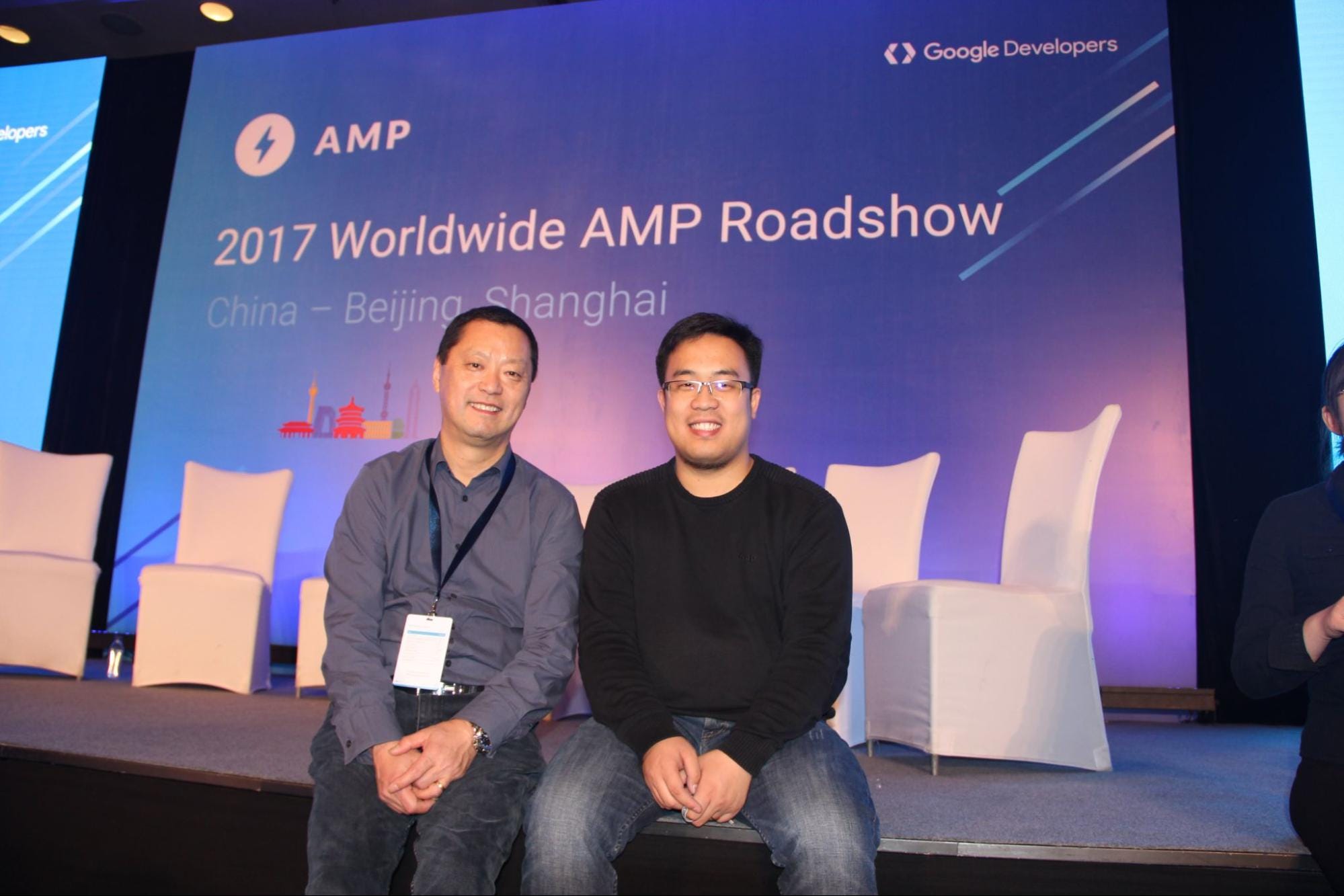
“Joining Google was a huge leap in platform and perspective for someone as young as I was at the time,” Cheng says. “I am deeply grateful for the trust of my professors at the School of Software in Nanyang Institute of Technology, and especially for the mentorship and recognition from Luan Yue at a critical moment in my career. That gave me the chance to extend what I had been doing in Nanyang to the entire country and to the global developer ecosystem.
“In my heart, Luan is not only the pioneer who systematically brought Google’s developer programs to China—widely known in the industry as the ‘father of Google developer communities in China’—but also a senior leader with a broad vision, high standards, and a genuine commitment to nurturing young people. Being able to work alongside such a heavyweight mentor at the start of my career allowed me to grow both rapidly and solidly.”
During his time at Google, Cheng participated in and later led the promotion and localization of technologies such as Android, TensorFlow, and Flutter within China’s developer ecosystem. Enabling developers to truly master these cutting‑edge technologies, he notes, is far more than a matter of publishing documentation or organizing a few launch events.
Over those years, he and his team built official Chinese‑language technical content channels, optimized learning paths, took part in large‑scale translation and review of technical documentation, and promoted localization of toolchains and adaptation to China’s network environment. Through technical conferences, in‑person training, and structured learning programs, they created opportunities for many front‑line engineers to systematically engage with advanced technologies.
In just three years, he planned and organized more than 200 technical events, enabling millions of Chinese developers to systematically encounter and use these technologies. These initiatives came to be regarded as key pillars connecting domestic developers with frontier technologies and laid a solid foundation for Google’s developer ecosystem in China.
4. Embracing open‑source AI to help more people ride the next wave
After leaving Google in 2018, Cheng founded a technology consulting firm, continuing to provide developer ecosystem and open‑source strategy services to technology companies including Google, Amazon, and Microsoft. His work and perspective expanded further to a global scale.
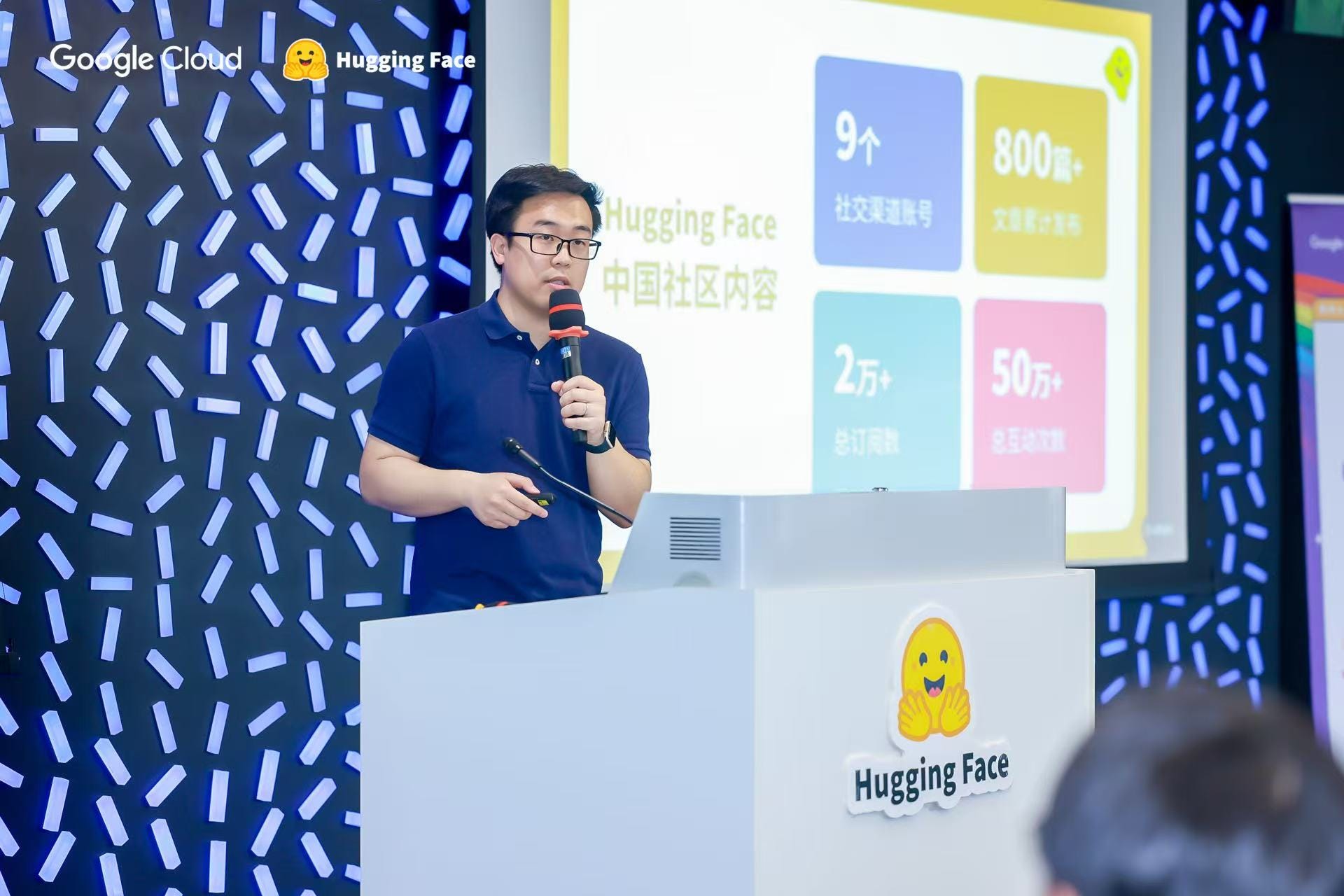
As the open‑source AI wave gathered momentum, he was recommended by his former Google colleague Wang Tiezhen—now Head of Asia‑Pacific at Hugging Face—to become a Hugging Face Fellow. In this role, he has been helping to drive education, application, and ecosystem building for the world’s largest open‑source AI community in China, enabling developers to remain competitive in the era of large models.
The Hugging Face Fellow program is an honorary track established for a small number of technologists who have made outstanding contributions to the community. There are currently only eighteen Fellows worldwide, and Cheng is one of them. Through this role, he has led and participated in numerous open‑source AI initiatives and events tailored for developers in China.
In an era of rapid technological change, one principle he consistently upholds is this: no matter how advanced or complex a technology is, someone must make it practically usable and create opportunities for all who are willing to learn to take part.
5. A message to current students at Nanyang Institute of Technology
When asked why he has always been willing to invest so much energy in communities, education, and practical programs, Cheng’s answer is simple: “I grew up in exactly this kind of environment.”
He says, “Many stories look inevitable in hindsight, but I have always been very clear that the credit actually belongs to the educators who have quietly dedicated themselves over many years. Because some people are willing to treat education as a century‑long endeavor—not rushing to see results, but steadily paving roads, breaking new ground, and lifting others up—young people’s attempts have soil in which to grow, and years later everything seems to fall into place naturally.”
Cheng adds, “So every time I pass on new technologies or new knowledge to more people, I think in particular of my teachers back then and feel genuine admiration for their patience and vision. In a sense, I am simply walking along the road they paved, doing my part to provide education and services for developers.”
For students currently studying at Nanyang Institute of Technology, Cheng offers some very concrete advice.
First, build a strong foundation, but do not equate “foundation” with just drilling textbooks and exams. Master the fundamentals—data structures, algorithms, operating systems, networking—while also using projects to put them into practice. You will find that only knowledge used repeatedly in real problems becomes your capability for the future.
Second, stay sensitive to the frontier, but do not let “hype anxiety” push you around. At each stage, choose one or two major tracks to follow over the long term—for example, mobile, AI, cloud‑native, or front‑end engineering. Once you choose, go deep and thorough. Being at the frontier is not about chasing every hotspot; it is about building your own judgment about how technology evolves.
Third, do more hands‑on work, and the earlier the better. Small but real projects matter more than grand plans that never leave the page. Do not wait until you feel “ready”—start with a tool, a small app, a contribution to open source, or a single talk. Finish small projects end to end, ship them, and iterate. That will train you far more than having a pile of half‑finished attempts.
Fourth, step into communities as early as possible. Campus tech clubs, local developer events, and online open‑source communities are all accelerators for learning and for being seen. You do not need to wait until you are “good enough” to participate; communities are precisely where you become stronger quickly. Ask more questions, reflect more, share more—you will gain far more in return than you expect.
Fifth, do not underestimate the value of communication and collaboration. Growth as an engineer is not just about writing code; it also involves explaining complex problems clearly and organizing work and people. Those who can express themselves clearly and drive collaboration forward tend to gain access to larger platforms earlier.
He concludes: “Do not underestimate your starting point. Where you start only defines where you stand now; it does not determine how far you can go. As long as you are willing to learn a bit more and take one more step, treating every attempt as laying one more stone for your future, graduates of Nanyang Institute of Technology can just as well stand at the global frontier of technology.”
Cheng’s career story is a technical journey that begins in Henan, is ignited at Nanyang Institute of Technology, and continues toward ever larger stages. Over the past fifteen years, the projects he has led or participated in have influenced the learning paths and technology choices of countless developers. They have also given the identity of being a “student from Nanyang” a clearer and more distinctive meaning within the global developer community.