

Recently, I was interviewed by Entrepreneur Daily, a business newspaper with a print circulation of 300,000, about my work at the intersection of developer ecosystems and open‑source technology localization, and I’m sharing an English version of that profile here.
Original post: Entrepreneur Daily, Google Translate
“Bringing Technology to More People”
A conversation with developer ecosystem and open‑source localization expert Cheng Lu
Cheng Lu is a technologist who has spent fifteen years deeply involved in developer ecosystems and open‑source technologies. At Google, he led multiple developer programs in China and drove the localization and large‑scale adoption of Flutter in the Chinese market. He is a Senior Member and review committee member of the IEEE (Institute of Electrical and Electronics Engineers), as well as a Hugging Face Fellow. Over the years, he has stood at the intersection of technological innovation and developer communities, playing the role of a “connector.”
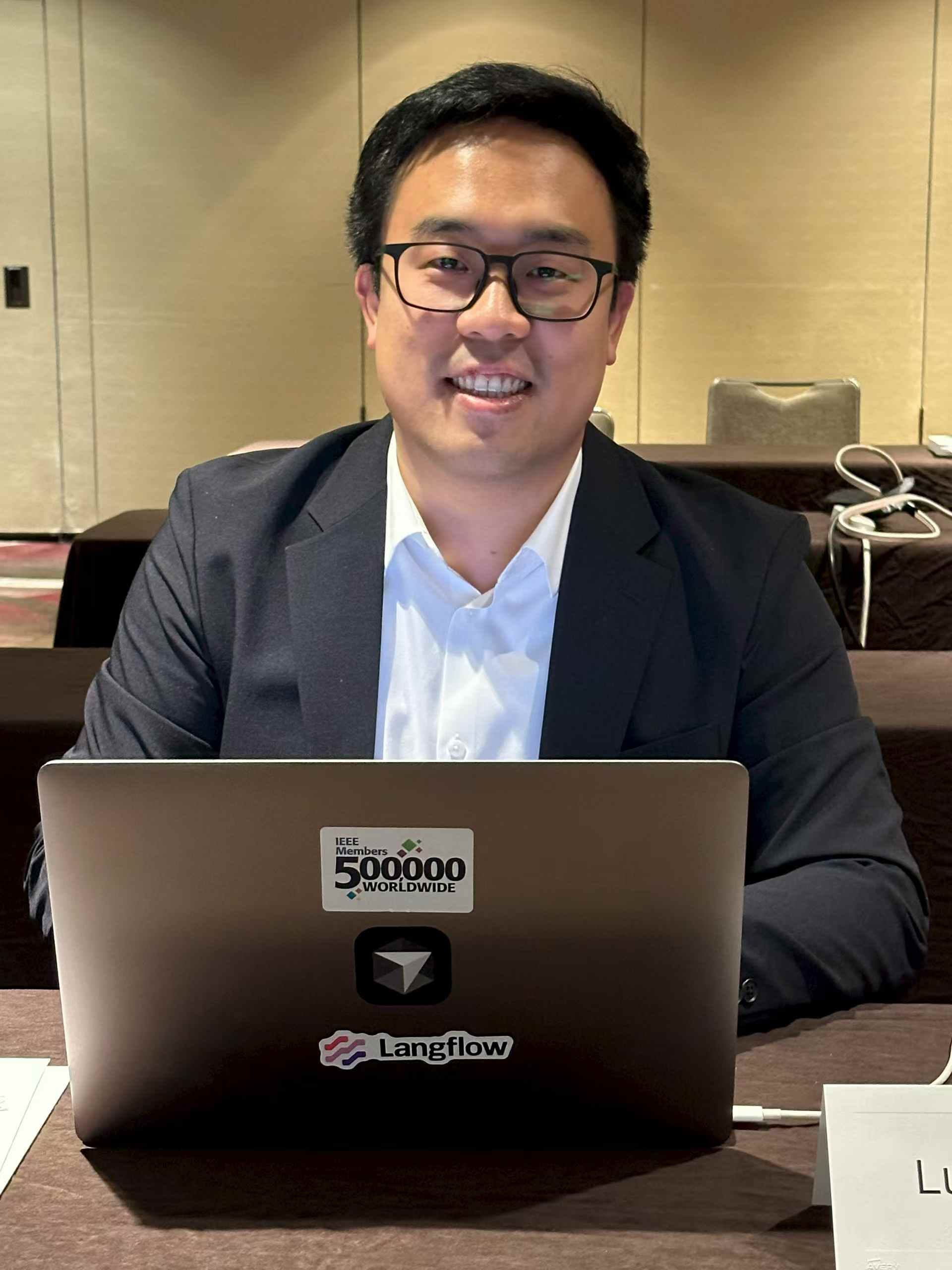
When we connected with Cheng Lu for this interview, he had just finished a full day of meetings for the IEEE Senior Member review committee. IEEE is one of the world’s largest and most influential professional technical organizations, bringing together more than 500,000 engineers and researchers across over 190 countries and regions. The standards published by IEEE underpin the global adoption and application of key technologies such as Wi‑Fi, Ethernet, and artificial intelligence.
As a specially invited member of the Senior Member review committee, Cheng joined experts from around the world to review candidate applications across different technical and engineering domains, assessing whether their research results, engineering practice, and industry impact have reached the level required for “Senior Member” status. Fewer than 10% of IEEE members worldwide receive this title. In such a system, he is standing on the side of the reviewers, helping to judge “who has already become a benchmark in the field.”
The moment the video call started, our first impression was: this is a typical state for someone deeply engaged in technical work—clean, straightforward, with a calm and measured tone and crisp, precise expression. In his eyes, there is the curiosity and drive characteristic of a young engineer, combined with the steadiness and sense of proportion that come from long‑term, hands‑on practice.
During a full day of committee work, Cheng had gone through a large number of lists of achievements. Compared with titles and numbers, he prefers to return to the essence of the question: What problems did the applicant use technology and research to solve, and how many people did it ultimately benefit? Our conversation naturally began from there: how can the latest technological and scientific advances truly reach more people?
From Google onward: realizing that “technology dissemination” is a system‑level endeavor
In 2015, Cheng joined Google China’s Developer Relations team. It was a period of explosive growth for China’s mobile internet, but also a time when there was a noticeable gap between Chinese developers and the global frontier of technology. He became one of the key leaders driving several core Google developer programs in China: from Android to TensorFlow, from Angular to Firebase, and later the rapidly growing Flutter.
Getting these technologies truly into the hands of Chinese developers was far more than a matter of publishing some documentation or holding a launch event. During those years, his work included: building official Chinese‑language technical content channels; redesigning learning paths; reviewing and coordinating large‑scale translation of technical documentation; promoting localization of toolchains and adaptation to local network conditions; building communities and offline education programs; and establishing technical collaboration mechanisms with universities and enterprises. These “infrastructure‑level” efforts, often unnoticed by outsiders, determine whether a technology can really take root.
Over three years, Cheng planned and organized more than 200 technical events, enabling millions of Chinese developers to systematically engage with cutting‑edge technologies. These events were seen as important bridges between Chinese developers and frontier technologies, and they laid a solid foundation for Google’s developer ecosystem in China.
“Whether a technology can truly land depends on the learning path and the toolchain. This has never been simple ‘promotion’; it’s a system‑level project,” Cheng says. Through these projects, he gradually transitioned from being a pure engineer to a technical communication expert who orchestrates content, localization, and community ecosystems.
Flutter: How China became one of the world’s most vibrant ecosystems
Flutter is Google’s open‑source, cross‑platform application development framework. By the end of 2024, it had more than one million monthly active developers worldwide and had become one of the top five open‑source projects on GitHub by annual contributions.
When Flutter first entered China, Cheng was one of the earliest local leaders responsible for its rollout. In a short period of time, he led efforts to build the documentation system, local toolchains, and development environments. Very quickly, China grew into one of the most active Flutter developer communities globally.
Under his leadership, Flutter’s localization in China achieved four core breakthroughs: establishing a usable, coherent Chinese‑language documentation system; completing SDK and network environment adaptation; driving enterprise‑level adoption by companies such as Alibaba, Tencent, ByteDance, and Baidu; and building a complete developer ecosystem loop.
The prosperity of Flutter in China was not an accident. Behind its evolution lies a longer, clearer thread: only when a technology crosses language barriers and other obstacles to reach a much broader group of people can a truly new ecosystem grow. What Cheng did was to build the foundational infrastructure that allowed a global technology to take root and thrive in China.
Globally, there are not many local leaders who can simultaneously drive documentation systems, local toolchains, enterprise‑level adoption, and a closed‑loop community ecosystem. This also brought Cheng sustained support and attention within Google and the Flutter community, eventually leading to his involvement in the Flutter open‑source project organization itself.
After Google: continuing to connect technology and people
After leaving Google in 2018, Cheng founded a technology consulting company, continuing to provide developer ecosystem and open‑source strategy consulting services for multinational tech companies such as Google, Amazon, and Microsoft. Many technology companies, when entering the Chinese market or building their local developer ecosystems, invite him as a key strategic advisor.
With the rise of the open‑source AI wave, and on the recommendation of his former Google colleague Wang Tiezhen—now Head of Asia‑Pacific at Hugging Face—Cheng became a Hugging Face Fellow. In this role, he helps drive education, application, and ecosystem building for Hugging Face—the world’s largest open‑source AI community—in China, helping developers stay globally connected and competitive in the era of large language models.
The Hugging Face Fellow program is an honorary track established for a small number of technical experts who have made outstanding contributions to the community. Globally, there are only a dozen or so Fellows, and Cheng is one of them. Through this role, he has led and participated in multiple open‑source AI projects and initiatives aimed at Chinese developers.
No matter how technology has changed, his primary thread has remained the same: connecting technology and people, and connecting global innovation with local implementation.
Why are “connectors” more important than ever in a technological age?
When asked about the role of “connector,” Cheng replied calmly: “Someone has to take these technologies forward, one step at a time, otherwise they only ever belong to a small group of people.”
In his view, technological breakthroughs are certainly important, but what truly changes the world is the process by which more people can understand, use, and benefit from these technologies. Cheng has chosen to stand at the intersection of front‑stage and back‑stage: on the one hand, he designs learning paths and ecosystem strategies; on the other, he validates those strategies through community practice.
For him, being a “connector” is both a long‑term career choice and the answer he arrived at after repeatedly returning to the essence of the problem.
Being a connector in the age of technology
We learned that Cheng and several colleagues from Hugging Face are currently working on translating a book about artificial intelligence technologies. In his view, translation is not simply a conversion between languages; it is the process of turning knowledge that “only a few people can understand” into something that “many people can grasp.”
Looking back at Cheng’s career, one can clearly see a consistent through‑line: enabling advanced technologies to be understood, used, and ultimately shared by more people. Over the past decade and more, the projects he has led or participated in have directly influenced the technology choices and learning paths of a large number of Chinese developers and major technology companies.
In the surging tides of technological change, what may be scarce is not just the next new model or framework, but the people who actually make technology land in the real world. Cheng Lu is one such “super connector,” facilitating the exchange of technology and ideas across the globe.